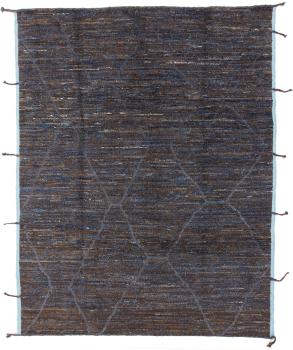
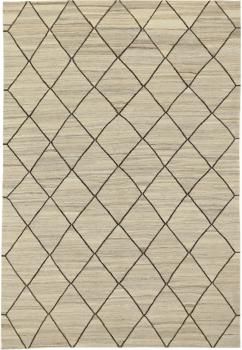
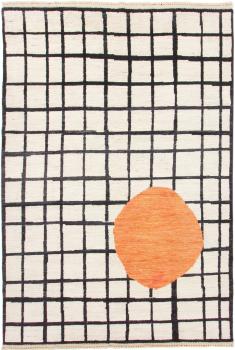
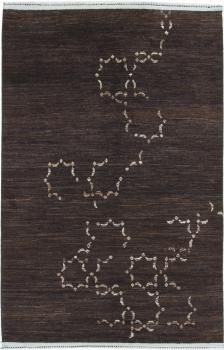
31 day money back guarantee Free shipping within Europe More than 88,000 unique rugs Since 1998: your expert for hand knotted oriental carpets

Berber Rugs

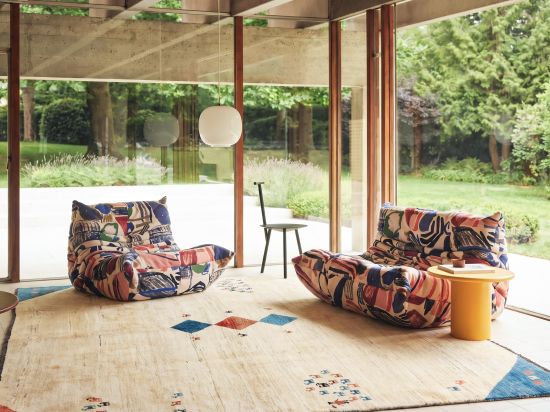
Bright Berber rug with circular pattern in a modern living room

Berber Rugs: The Rustic Beauty of Traditional Craftsmanship

A brief look at history

The history of Berber carpets goes back many centuries. In the Atlas Mountains of Morocco, the Berber tribes have long laid their floors with handmade pieces, long before carpets became popular as decoration in this country.
They were not woven for guests, but for everyday use. In winter, they served as protection against the icy cold in the mountains, and in summer, as a cushion on the hard ground.

But that was not all. Gradually, patterns were added: Diamonds represented fertility, Zigzag lines told stories of life's paths. Eye motifs were meant to ward off misfortune, while crosses and other shapes often had religious or nature-related significance.
All of this was not written down somewhere, but simply passed down from generation to generation through weaving.

As a Moroccan carpet, the Berber has now become known worldwide and is no longer found only in Morocco. Hand-knotted carpets of this type can be found in homes, lofts, and houses all over the world.

Tip: If you value tradition, it is worth looking for hand-knotted originals from Morocco.

What makes a genuine Berber carpet?

A Berber rug made by hand has little in common with a machine-made one. The production process itself shows this: for weeks, sometimes months, women, usually in small workshops or at home, sit at the knotting frame, tying knot after knot.

A genuine hand-knotted Berber rug from Morocco always carries the individual touch of the knotters, and each time you receive a unique piece.

The base is almost always sheep's wool. It is warm, durable, and feels soft to the touch. In some cases, cotton is added to make it more stable. Pieces with silk content look particularly exquisite.
The fine threads give the patterns a slight sheen and make the surface smoother. This looks elegant without the rug losing its practicality for everyday use.

Colours also play a significant role. Some Berber rugs remain in their natural state – cream, white, beige. Others are colourful and vibrant.

The patterns are also diverse: in one region, the knots are more strictly geometric, while in another, the rugs are full of symbols and intertwined lines. Small irregularities are part of the charm. They show that this was truly handcrafted.

Tip: Pay close attention. A rug with silk feels noticeably smoother and cooler than a pure wool piece.

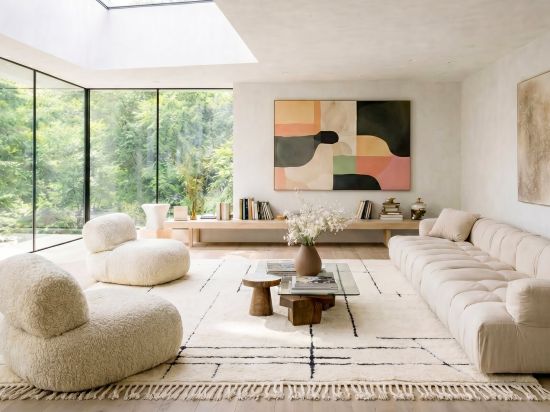
Modern designer rug in beige with black line pattern in a minimalist living room.

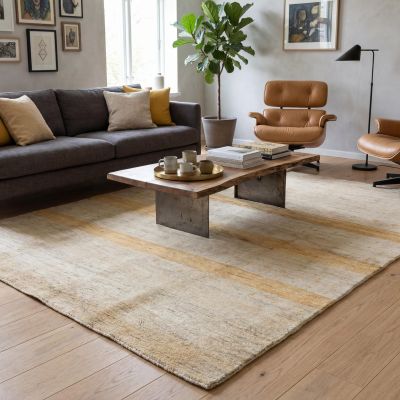
Beige Berber rug with brown stripes in the cosy living room.

The most important types of Berber rugs

Berber carpet is not the same as "Berber carpet". There are several types that differ.

The Berber carpets are tightly woven and very durable.
Typically, they feature geometric patterns on a light background. They appear simple and fit into almost any decor.

The Barchi carpets, often referred to as Moroccan Berber , are slightly looser in weave.
Many Moroccan Berber carpets are lighter in colour, some are vibrant. They feel lighter and add a playful touch to the room: perfect for a child's bedroom or even a study if a livelier atmosphere is desired.

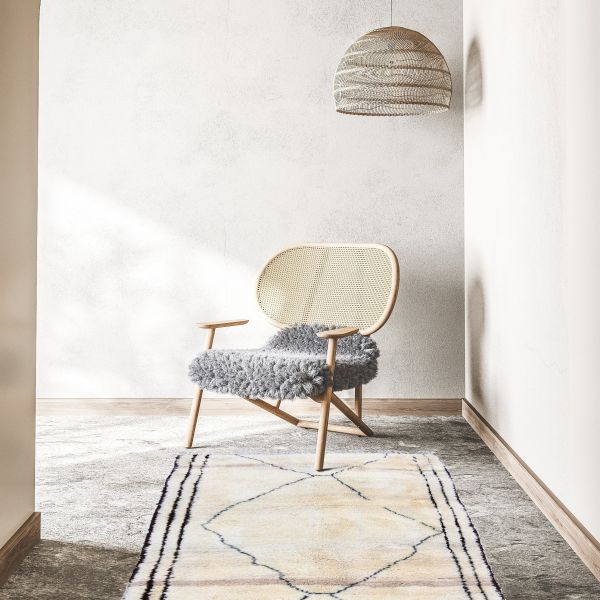
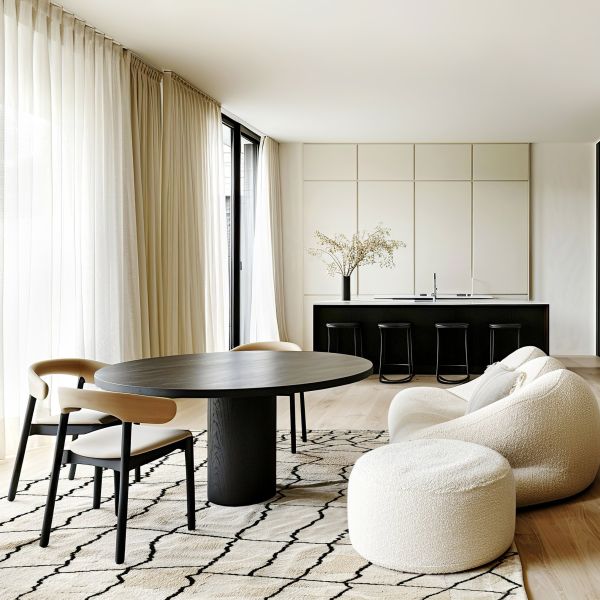
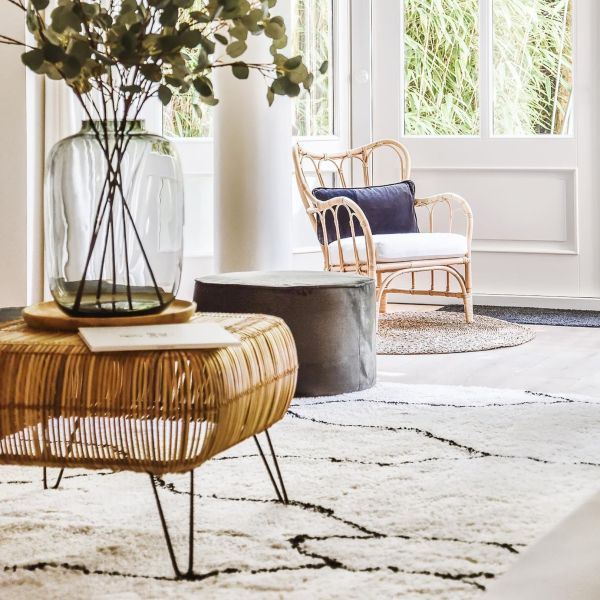
The Beni Ourain carpets are very well-known. They are fluffy, high-pile, and usually white with black diamonds. This very contrast has made the Beni Ourain carpet a favourite of Scandinavian interior design. They look particularly striking on wooden floors.

Tip: If you prefer calm and simplicity, try a classic or Beni Ourain carpet. If you want to introduce some colour, look for a Barchi.

Advantages of Berber Carpets

A Berber rug lasts a long time when it is well cared for. Due to the handcrafted nature, each piece is unique – no two look exactly alike. For many, that is the appeal: you are not just buying a rug, you are buying a one-of-a-kind piece.

Many models, especially the Beni Ourain, are among the typical high-pile rugs and are some of the most popular home accessories.

Tip: If you value sustainability, a Berber rug is a good choice. It is made from wool, silk, or cotton, entirely without industrial mass production. This conserves resources and makes the pieces more durable than synthetic fibre rugs.

Disadvantages to be aware of

Es gibt jedoch auch Nachteile. Ein handgeknüpfter Berberteppich ist teurer als ein maschinell gefertigter. Besonders hochflorige Varianten benötigen Pflege, da sie Staub und Schmutz leichter aufnehmen.

Auch das Gewicht sollte nicht unterschätzt werden. Grosse Teppiche sind schwer.

Which carpet size fits which room?

Size makes a big difference. A rug that is too small gets lost in the room. One that is too large can quickly look overcrowded.

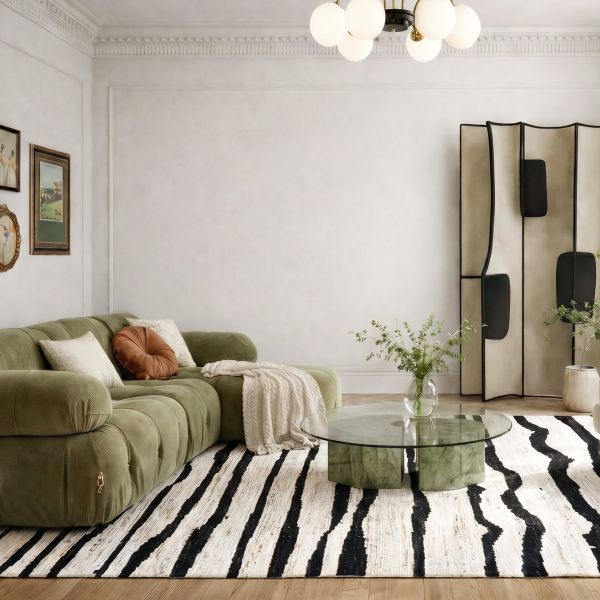
In the living room, a size of 200 x 300 cm fits well with sofas that have two to three seats. If you have a large seating area, it’s better to choose 250 x 350 cm. Important: The rug should accommodate the front legs of the sofa, which makes it look more cohesive.

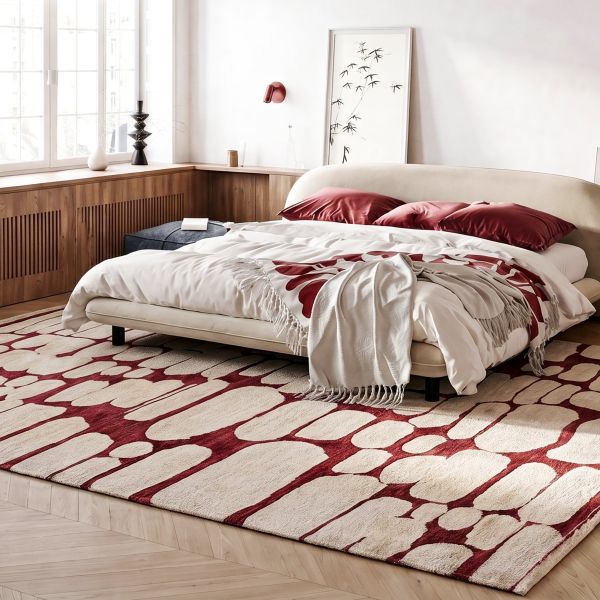
In the bedroom, it depends on the bed. For a double bed, 160 x 230 cm is suitable. In larger rooms, a rug measuring 200 x 300 cm adds more comfort – it also extends sufficiently on the sides.

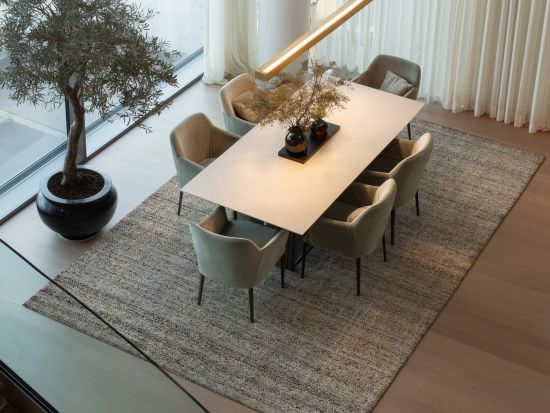
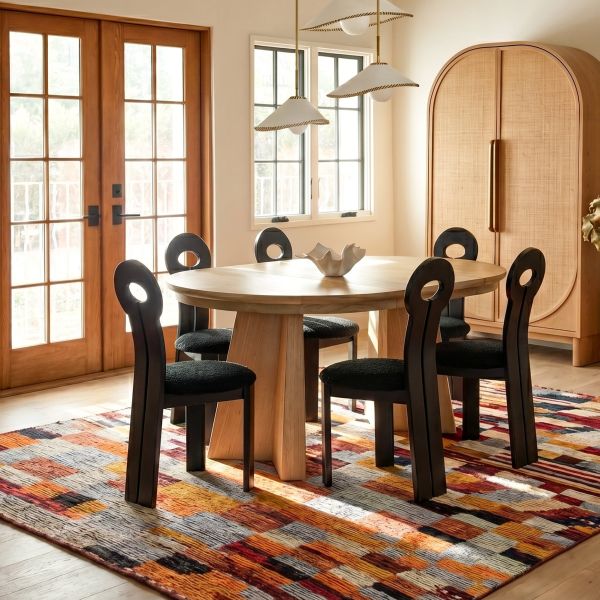
In the dining room, the rug must be large enough for the table and chairs to fit completely on it. For a table with six chairs, 200 x 300 cm is sufficient.

For larger tables, 250 x 350 cm is better, so that the chairs remain on the rug even when pushed back.

Room Recommended Size
Living Room 200 x 300 cm
Living Room (large) 250 x 350 cm
Bedroom 160 x 230 cm
Bedroom (large) 200 x 300 cm
Dining Room 200 x 300 cm
Dining Room (large) 250 x 350 cm

Tip: Mark the dimensions on the floor with painter's tape. This way, you can immediately see if the size fits in the room.

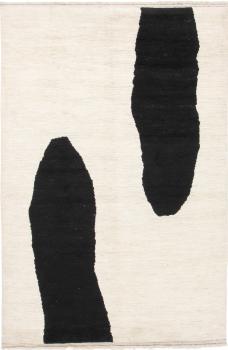
Berber rug with traditional pattern in the bright entrance area
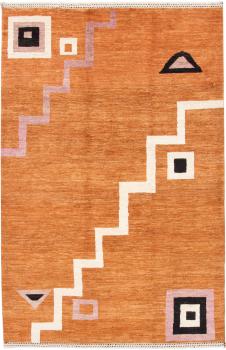
Berber Maroccan
236 x 172

NZ$3,282

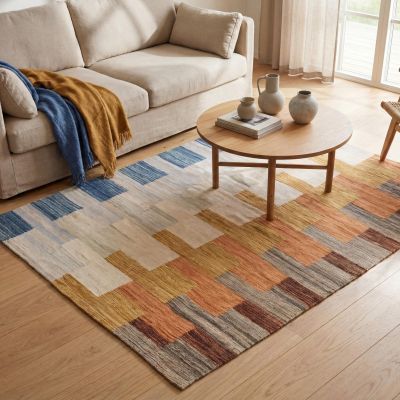
Orange Berber-Teppich mit geometrischem Muster im hellen Wohnzimmer
Berber Maroccan
232 x 158

NZ$2,075

Styling ideas with Berber rugs

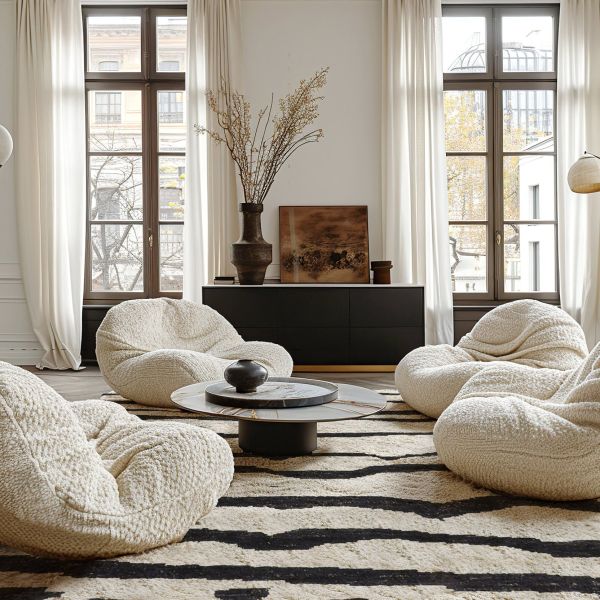
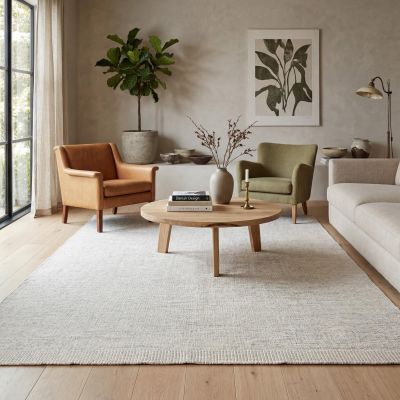
Berber Rugs are versatile. In simple rooms, they create a cosy atmosphere. In traditionally furnished rooms, they provide a clear contrast.
With wood, they appear warm, while with glass or metal, they seem cooler and more modern.

You can also combine several rugs. A large Beni Ourain in the living room, a colourful Moroccan Berber in the study, and a classic piece in the hallway – this creates an overall look that is not boring.

Tip: Better to have fewer pieces of furniture and a striking rug. That way, it remains the focal point.

Care and cleaning of Berber carpets

To keep a Berber rug looking good for a long time, it needs care. Vacuum it regularly, preferably without a brush attachment. Occasionally take it outside, fresh air does it good – but don’t place it in direct sunlight. Treat stains immediately, sparkling mineral water often helps.
Very important: blot, don’t rub.

For a deep clean, it’s worth having the rug professionally washed every few years.

Tip: Rotate the rug from time to time, this will help it wear evenly.

The designer is sitting on a Berber rug with a graphic zigzag pattern in black and white in the outd

Berber rug with a geometric zigzag pattern, on which a woman is sitting.

How long does a Berber carpet last?

A genuine Berber rug can last for decades if properly cared for.
Many people ask the question: How long does a Berber rug last?
With the right maintenance, it can be twenty, thirty years or even more.
In Morocco, they are often passed down within families, sometimes over several generations.

Machine-made copies do not withstand this length of time. They lose their shape and appeal after a few years.

Tip: Do not view a Berber rug as a short-term purchase. With the right care, it will last you many years.

Overview of Symbols and Meanings

Symbol Meaning
Diamond (◇) Femininity, fertility, protection. Often interpreted as a mother symbol. Two connected diamonds can represent marriage and family creation.
Zigzag lines (~~~~) Life path, water, movement. Symbolises challenges, detours, and protection from negative forces.
X or cross shapes (✕, +) Balance, connection between heaven and earth. Also used as a protective symbol against the evil eye.
Eye (◉ or ☉-like) Defence against the "evil eye". A very strong protective symbol, often centrally placed.
Diamond with dots (◇•) Pregnancy, new life. Dots can symbolise seeds or children.
Ladder or staircase shapes (▭▭▭) Transitions, ascent, spiritual journey. Often interpreted as a symbol of transformation.
Hand (similar to Hamsa) Protection, blessing, spiritual purity. Often abstractly suggested as five lines or fingers.
Circle (○) Infinity, sun, wholeness. Also a symbol for the cycle of life.
Fishbone pattern (≋ or ||//||) Water, food, life. An ancient symbol of abundance and prosperity.
Animals (goats, camels, birds – stylised) Depending on the animal: protection, fertility, freedom. More commonly found in rarer and more complex carpets.

Berber rugs for a cosy home

Berber rugs are more than just floor coverings – they are an expression of a centuries-old culture and at the same time a modern design element. Whether you choose a classic Beni Ourain, a colourful Moroccan Berber, or a geometrically inspired Ghashghai Berber, with a Berber rug you not only bring a piece of tradition into your home, but also a unique work of art that adds warmth and personality to your spaces.