31-day returns policy Free shipping within Europe More than 95,000 unique rugs Since 1998: Your expert in hand-knotted oriental rugs

Anniversary Sale
Save up to 20% – even on already discounted rugs!

Nain Trading

Feng Shui & Rug

The Art of Living

A home is far more than the sum of its furniture and home accessories. Some rooms feel inviting and balanced, while others seem restless or lacking in harmony. Often, the difference does not lie in individual furnishing elements, but in how they work together and shape the space.

This is exactly where Feng Shui comes in. This traditional teaching focuses on the mindful design of living spaces and shows how to create a pleasant atmosphere. It is not only colours and materials that play a role, but also the way different elements relate to one another.

Oriental rugs fit this idea perfectly. With their natural materials, harmonious colours and timeless designs, they help make living spaces feel more welcoming and balanced. It is no wonder, then, that they have held a firm place in stylish interiors around the world for centuries.

How a piece of fabric can transform the feel of an entire room

Sometimes it only takes one small thing. A rug that suddenly sits differently. You may not have planned it in any great detail; perhaps it was just a whim, but all at once everything feels different. The room breathes more calmly. There is less echo. And somehow you feel more at ease. Moments like these are no coincidence. In Feng Shui, the ancient Chinese art of spatial harmony, people speak of Qi – the energy that flows through rooms like a quiet current. You cannot see it, but you can feel it. And often a single rug is enough to bring it into balance.

The Importance of Rugs in Feng Shui – Colours and Elements

Feng Shui is often associated with complicated rules or spiritual concepts. At its core, however, it is about something very simple: designing spaces in a way that makes us feel good. A home that radiates calm, provides a sense of direction and still leaves enough room to breathe.

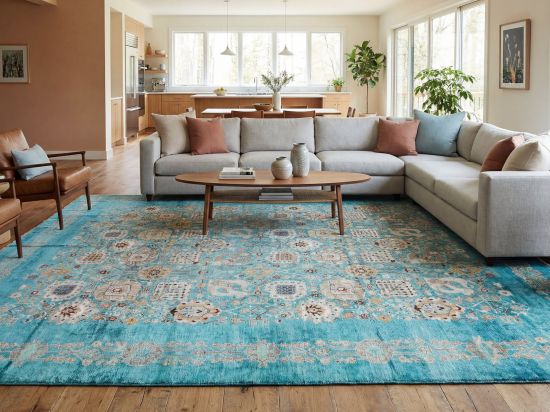
Rugs play a special role in this. They bring furniture together into a harmonious whole, create structure and add warmth and comfort to rooms. Especially in open-plan living areas, they help to visually define individual zones without interrupting the natural flow of the space.

It is often these small details that make all the difference. They ensure that a room feels balanced, that you feel at ease straight away, and that your home becomes a place where you truly enjoy spending time.

The colours in rug design

Colours have a direct influence on the feel of a room and overall wellbeing.

  • Red stands for energy and warmth. It creates accents and brings the room to life.
  • Blue has a balancing effect and creates a calm atmosphere.
  • Green promotes concentration and has a natural, grounding effect.
  • Sand and beige tones create a subtle, understated look and provide a balanced base – ideal for minimalist interiors or as a calm contrast to bold colours.

Sample

Oriental rugs are never designed at random. Their patterns often follow ancient, almost forgotten rules – circles with no end, diamonds that evoke gardens, blossoms that never fade. These ornaments are not just beautiful. They have an effect. Like symbols our subconscious understands.

And then there are rugs that have no clear centre at all. They remain quiet instead of telling a story. That too can be important – especially in rooms where you want to find peace yourself.

Which rugs are particularly well suited to Feng Shui?

Feng Shui may sound a bit esoteric to many people at first. But really, it’s about common sense: What makes us feel good? What helps us breathe more easily? What brings structure without feeling restrictive?

A rug can do exactly that. It connects top and bottom, hard and soft, function and feeling. In open-plan living spaces, where everything flows, it becomes an island: a place that holds the room together.

And sometimes it’s exactly this detail that makes the difference on a subconscious level. Why a room suddenly feels “just right”. Why you stay seated a little longer. Or why getting up in the morning feels easier.

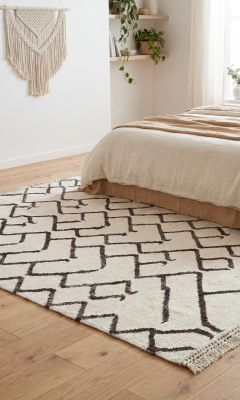
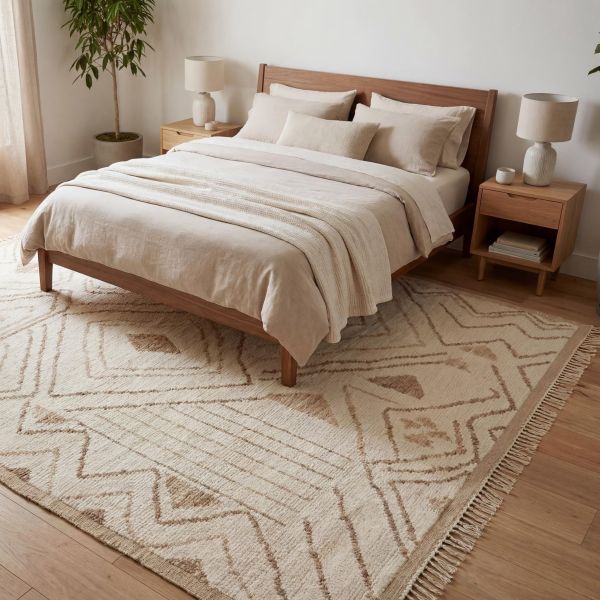
Berber rug in a calm Feng Shui-style bedroom

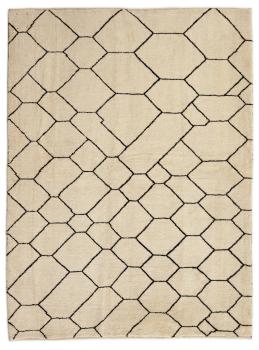
Berber Rugs – Harmony Through Naturalness

Berber rugs are predominantly made from high-quality virgin wool and impress with their natural look. Their light shades and clean patterns create a relaxed and welcoming atmosphere.
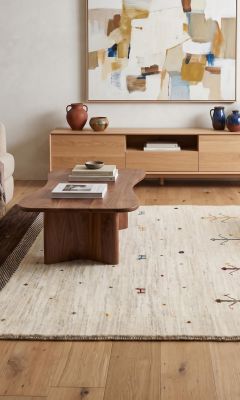
Light hand-knotted Gabbeh rug in a calm living room

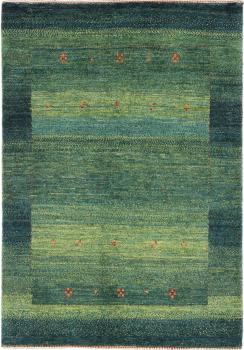
Gabbeh Rugs – Naturalness and Calm

Gabbeh rugs are characterised by their simple designs, soft wool quality and natural colours. With their understated look, they create a calm and balanced feel in a room, making them ideal for Feng Shui principles.
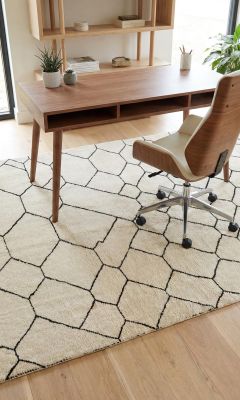
Nature scene rug in the study for a natural

Nature Scene Rugs – Inspired by Nature

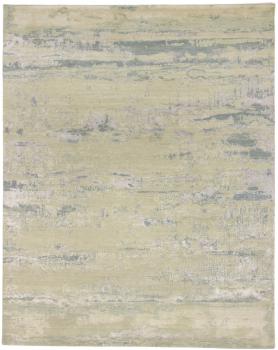
The Naturescene collection combines natural colours and organic designs. These rugs are particularly well suited to living spaces where a connection to nature and a harmonious atmosphere are desired.
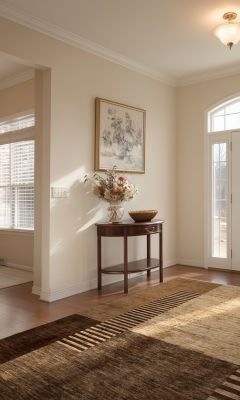
Elegant Mahra rug in the entrance area for a harmonious Feng Shui atmosphere

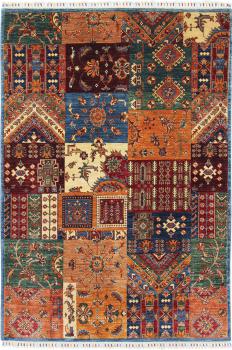
Mahra Rugs – Elegant Balance

Mahra rugs combine traditional craftsmanship with modern colour palettes. Their balanced patterns can help bring structure and balance to a room without appearing too dominant.
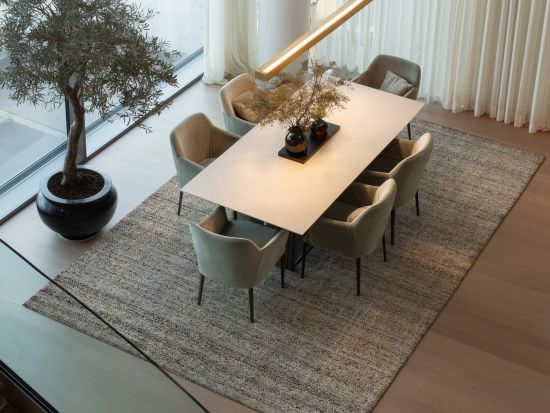
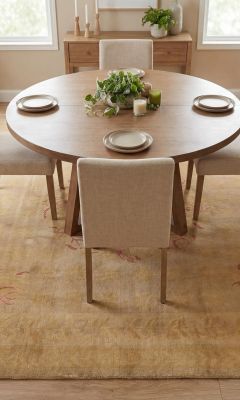
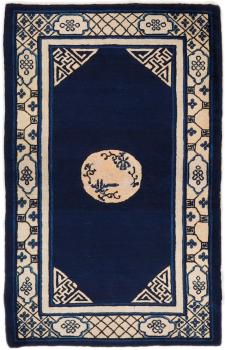
Hand-knotted Chinese rug in the dining room with soft colours

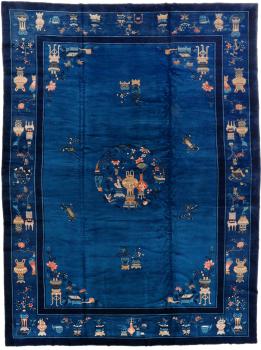
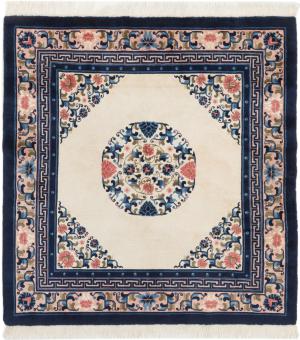
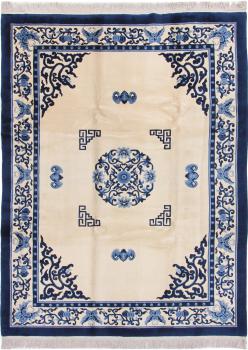
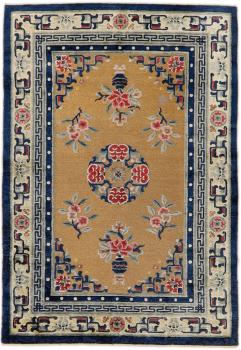
China Rugs – Soft Colours and Timeless Elegance

Many Chinese rugs are characterised by subtle colour nuances and harmonious patterns. This makes them ideal for living spaces where calm, serenity and a balanced ambience take centre stage.

Feng Shui in Every Room: How to Create Harmony Throughout Your Home

Feng Shui can be applied to more than just the living room. Every room has its own purpose and places different demands on furnishings, colours and materials. With the right furniture layout and a suitable rug, you can create greater balance, comfort and wellbeing in every area of your home. Hand-knotted rugs made from natural materials are particularly effective at defining individual spaces and creating a harmonious atmosphere. Below, we show you what matters most in the key rooms of your home.

Feng Shui in the Living Room – Creating Harmony and Cosiness

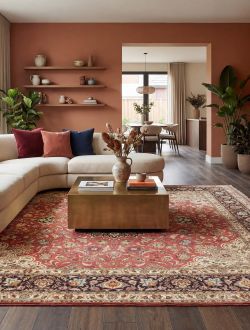
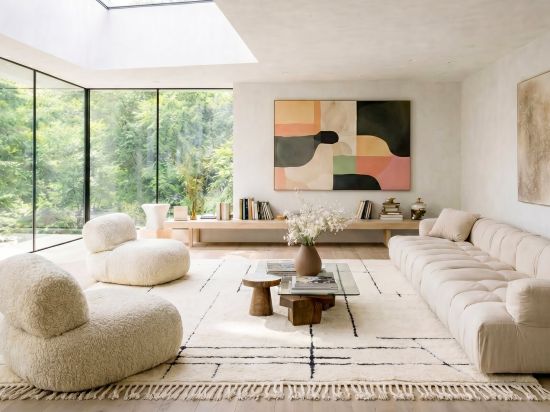
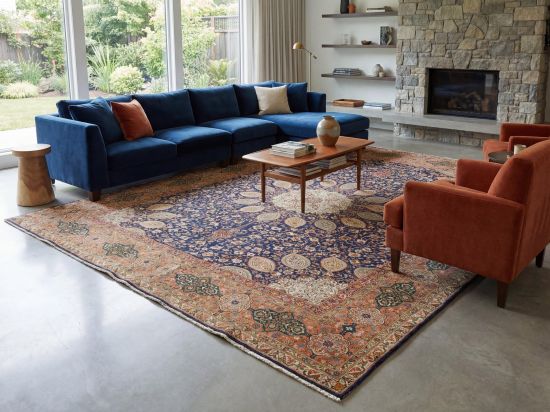
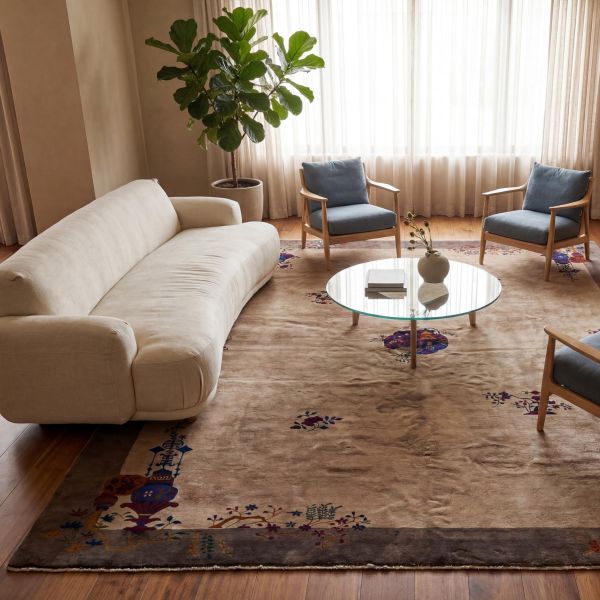
The living room is often the heart of the home. It is where people relax, spend time with family and friends, or simply unwind. In Feng Shui, this room should convey comfort, balance and a pleasant sense of wellbeing. To allow energy to flow freely, it is recommended to place the sofa with its back against a solid wall while keeping the entrance area in view. A sufficiently large rug brings the sofa, armchair and coffee table together as a harmonious whole and adds more structure to the room. In particular, hand-knotted wool rug, Gabbeh rugs or Berber rugs are ideal for a Feng Shui living room thanks to their natural materials and warm appearance. This creates an inviting atmosphere in which you can feel completely at ease.

Feng Shui in the Children's Bedroom – Encouraging Security and Creativity

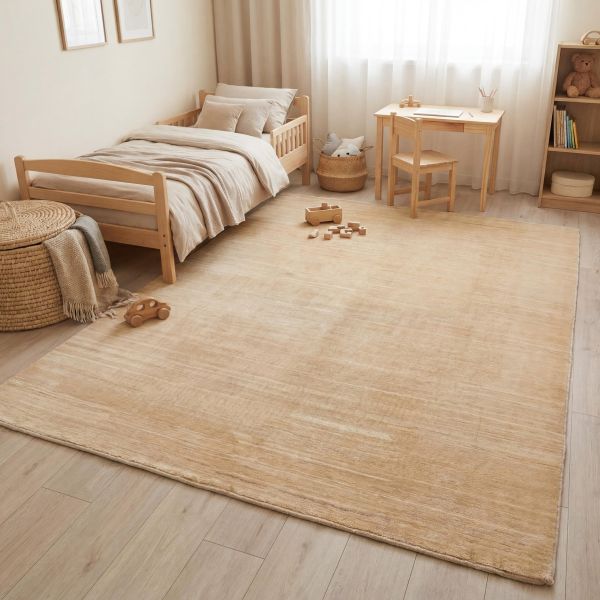
The children’s bedroom should be a place where children feel safe, relaxed and free to develop. In Feng Shui, the focus is therefore on a balanced design with plenty of open space, natural materials and a harmonious colour scheme. Furniture should be arranged so that the room feels organised and not overcrowded. A soft rug adds extra comfort, provides a pleasant play area and gives the room a warm atmosphere. Rugs in natural colours and with subtle patterns are particularly effective in creating a calm environment that encourages both creativity and rest.

Feng Shui in the Bathroom – Creating Calm and Balance

The bathroom is a place of relaxation and rejuvenation in Feng Shui. A tidy and harmonious design helps to create a calm atmosphere and leave everyday stress behind. Light colours, natural materials and plenty of light make the room feel bright and inviting. A rug can also enhance comfort by adding warmth and softness. Models in gentle natural tones in particular support a relaxing ambience and transform the bathroom into a small haven of wellbeing.

Feng Shui in the study – supporting concentration and productivity

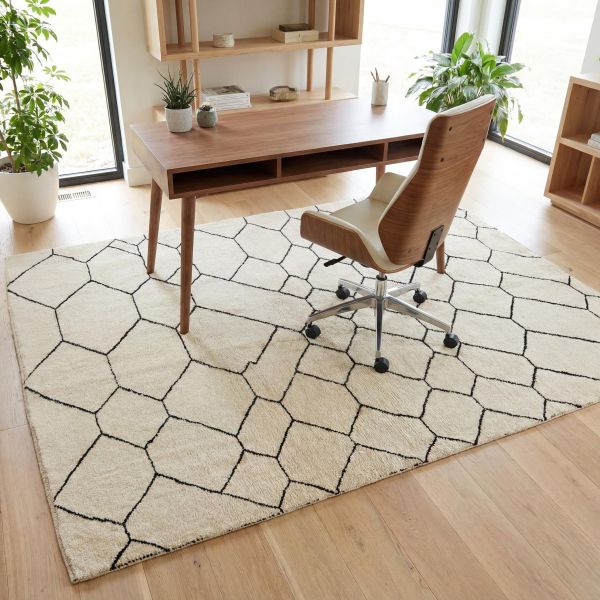
A well-designed study can help you work with focus while creating a pleasant atmosphere. In Feng Shui, it is recommended to position the desk so that the door is visible without sitting directly in front of it. Tidiness and a clear structure encourage concentration and reduce distractions. A rug can visually define the workspace and add extra comfort. Mahra rugs in particular are ideal for the study thanks to their harmonious colours and balanced patterns. They create a calm environment that supports focused work while also adding a stylish touch.

Feng Shui in the Bedroom – Promote Peace and Relaxation

The bedroom is a sanctuary where relaxation and rest take centre stage. In Feng Shui, particular emphasis is placed on a calm atmosphere, harmonious colours and a balanced interior. Unnecessary items and distractions should be avoided wherever possible to support a restful night’s sleep. A soft rug provides extra comfort and brings warmth and a sense of cosiness to the room. Gabbeh rugs in particular are ideal for the bedroom thanks to their natural colours and simple patterns. Berber rugs also create a calm setting with their soft virgin wool and understated look, inviting you to relax and feel at ease.

Feng Shui in the Kitchen – Energy and Balance in Everyday Life

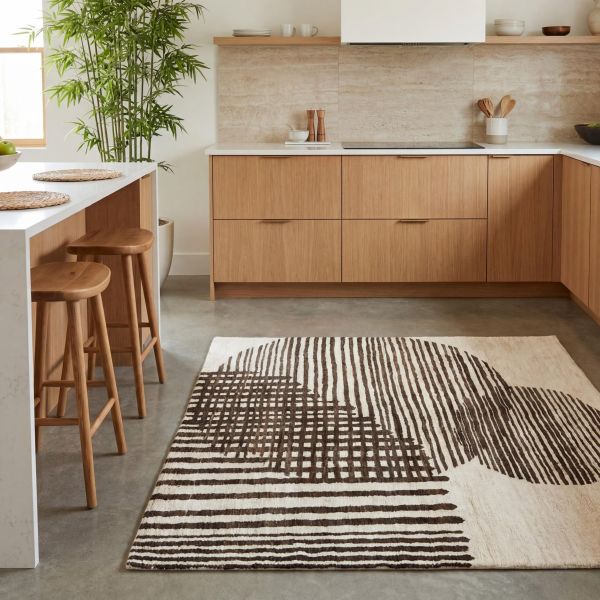
The kitchen is considered one of the most important rooms in the home in Feng Shui, as it is associated with nourishment, health and prosperity. A tidy and well-organised kitchen helps to create a positive and welcoming atmosphere. Light colours, natural materials and plenty of open space support a sense of order and balance. A rug can add a stylish accent while also making the room feel cosier.
Feng Shui principle Effect in the room
Clearly structure rooms An oriental rug can visually separate different living areas and create a greater sense of order.
Emphasise the centre of the room A centrally placed rug creates stability and ties the furnishings together into a harmonious overall look.
Create balance between furniture Rugs help to visually connect large pieces of furniture and create a balanced feel within the room.
Prefer natural materials Hand-knotted wool rugs bring warmth, comfort and a natural living atmosphere.
Support the room’s function Depending on the room, different types of rug can encourage calm, concentration or sociability.
Choose colours consciously Warm natural tones create a cosy feel, while light colours can convey openness and lightness.
Maintain open space A rug should structure the room without making it feel visually cluttered or restricting walkways.

Avoid Common Feng Shui Mistakes

Overcrowded rooms

Too much furniture or too many decorative elements can make a room feel cluttered. In Feng Shui, importance is placed on having enough open space so that a pleasant and harmonious atmosphere can be created.

Blocked walkways

Clear walkways contribute to an open and welcoming feel in the home. If passageways are restricted by furniture or objects, the room can quickly feel cramped and cluttered.

Lack of structure in the furniture arrangement

Furniture should be placed thoughtfully and create a clear room layout. A cluttered arrangement can disrupt the harmony of a room and make the overall look appear unsettled.

Rugs that are too small

A common mistake is choosing a rug that does not suit the size of the room or the furniture arrangement. Rugs that are too small can make individual pieces of furniture look isolated, whereas a sufficiently large rug brings the sofa, armchairs and table together into a harmonious whole.

Too many patterns and colours

Colours and patterns give a room personality, but they should be used in a balanced way. Too many different designs can make the space feel cluttered and disrupt the desired sense of calm and balance.

Neglect of natural materials

Natural materials such as wool, cotton or wood create a warm and pleasant atmosphere. Hand-knotted rugs made from natural fibres help create a harmonious living environment and fit particularly well with the basic principles of Feng Shui.