31 day money back guarantee Free shipping within Europe More than 88,000 unique rugs Since 1998: your expert for hand knotted oriental carpets

WOVEN STORIES OF PERSIAN RUGS

Old town with adobe architecture and domes, Persian desert city with mosques in the background.

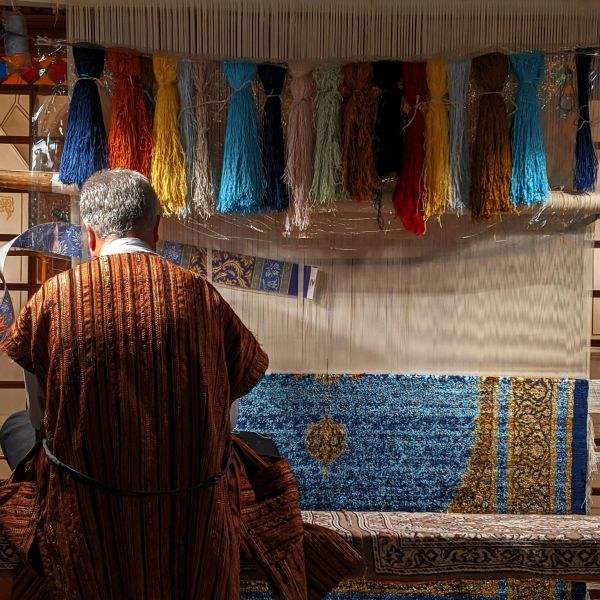
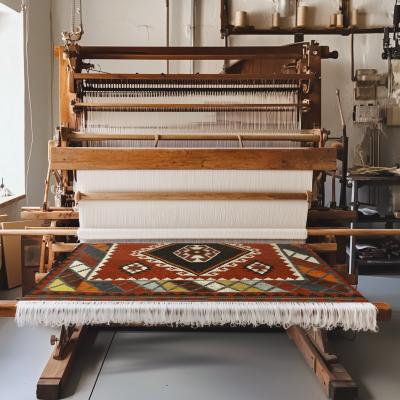
Woman weaves a colourful kilim carpet on a traditional loom.

Did you know that every colour and pattern in a Persian carpet tells a deep story?

A Persian carpet is far more than a piece of furniture. It is a work of art – a woven poem of light, silence, and centuries-old tradition. Every thread carries a story, every colour an emotion.

In the cities, villages, and tents of Iran live the guardians of this silent heritage. Knotters whose craftsmanship is based on technique, dedication, and an inner rhythm. The colours come from pomegranate, indigo, walnut shell, and madder root – they smell of earth, of memory, of time.

A genuine Persian carpet is like a silent book. It tells of dreams, landscapes, myths, and ancient longing – stories of human destinies, love, faith, and loss.

Colours of Nature

Even the colours speak softly of inner worlds. A deep red can embody joy, courage, and the fire of the heart. Blue represents spirituality, green signifies hope, white stands for purity, black denotes mystery, and yellow embodies wisdom. These meanings flow invisibly into the fabric. They make the carpet a mirror of an ancient soul. Pomegranate peels dry in the sun of Kerman, giving the carpet gold its shine. In Isfahan, deep indigo blue emerges on the finest silk. The nomads of Heriz derive a rich brown from walnut shells. And near Shiraz, the Qashqai dye a vibrant ruby red with madder root.

Colourful wool strands for carpet production: natural yarns for hand-knotted rugs

The Art of Silence – Knots as Language

A carpet is not created in haste – it grows, knot by knot, guided by memory, skill, and intuition. Each individual knot is a moment of concentration, an act of devotion. In the ancient city of Tabriz the weavers achieve an impressive mastery: up to 900,000 knots per square metre. What emerges are exquisite miniatures – textile poems, in which verses from the “Shahnameh” or by Hafiz are woven into patterns.

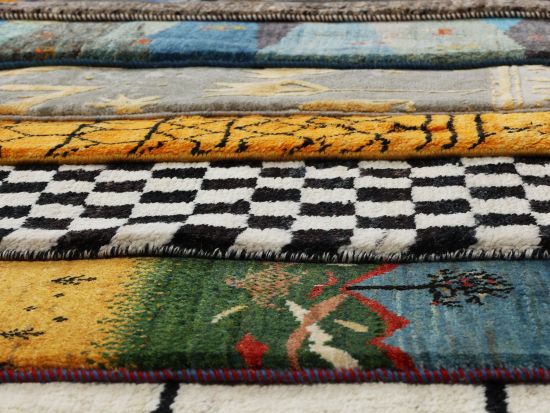
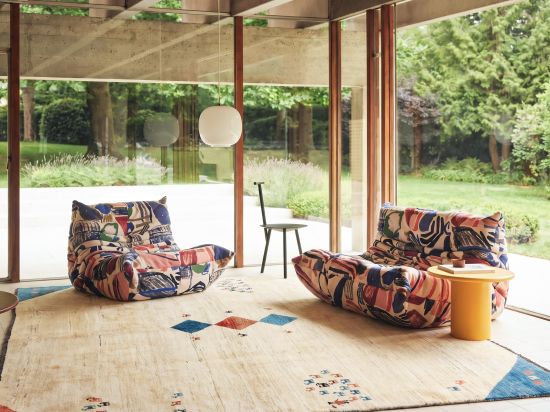
In stark contrast are the Gabbeh carpets of the Luri and Qashqai. They do not speak of technical precision, but of emotional expression. Raw, honest, intuitive – like diaries written in wool, full of spontaneity and feeling. Here, each carpet is a unique reflection of the soul.

A true Persian carpet is not just a product. It is not mass-produced, but a being – animated and eloquent in its silence. What appears as ornamentation may be a prayer. What seems like colour is memory: of wind, earth, and the voices of those who have long departed.

A carpet does not demand attention – it gives it. It does not impose itself, but those who see it feel: Here, something genuine speaks. It follows no trend, but its own sense of time. It is quiet – and yet profound. Old – and yet alive. A Persian carpet is not a purchase. It is an encounter. An invitation to slowness, to silence, to the beauty of things. Those who listen to it hear more than patterns – they hear history. And perhaps even themselves.

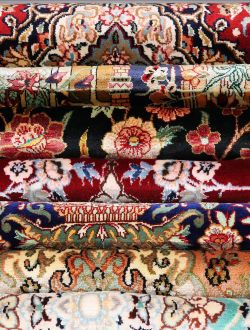
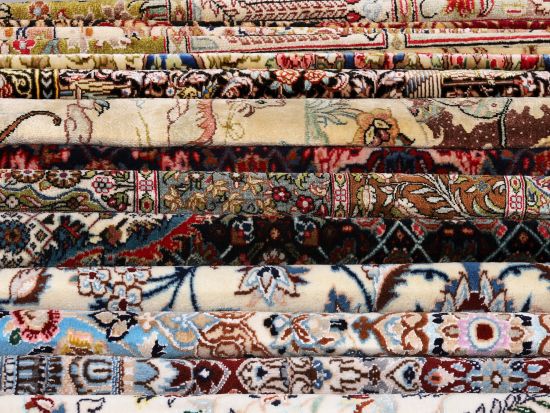
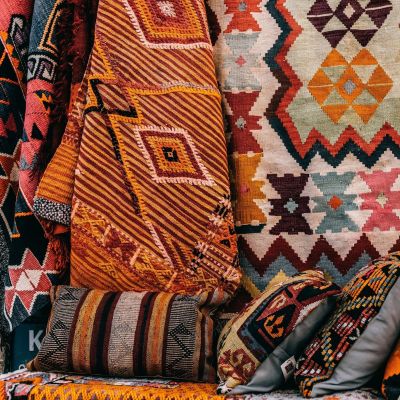
Rolled-up row of oriental rugs with floral patterns

The patterns

As for the patterns, the animals, trees, and other elements in Persian carpets can also have specific symbolic and cultural meanings. For example, the animals depicted in these carpets often carry symbolic significance: the lion can symbolize courage and strength, the phoenix represents renewal and immortality, and the fish signifies fertility and abundance. The trees in Persian carpets frequently symbolise life, the connection to nature, and spirituality. Depending on the type of tree, they can also have specific meanings; for instance, the cypress is a common symbol associated with immortality and spirituality.
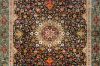
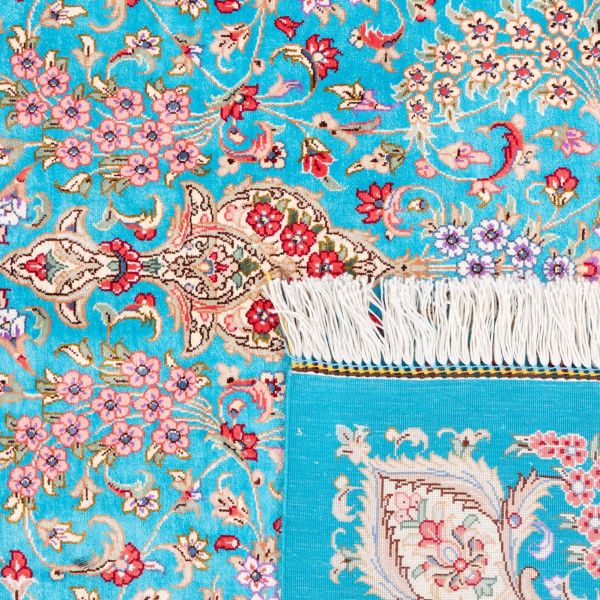
Close-up of a finely knotted Tabriz silk carpet
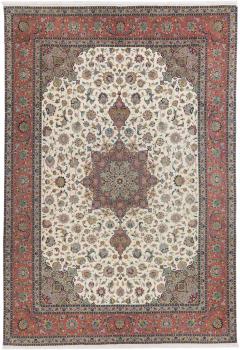
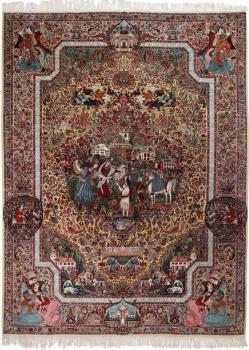
Tabriz 65Raj
362 x 299

NZ$118,916

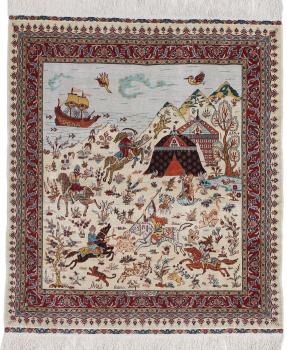
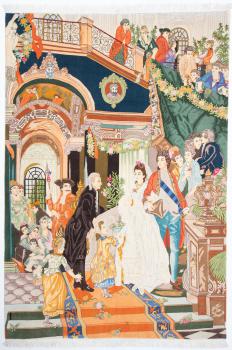
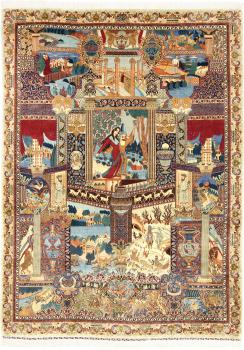
Tabriz carpet with Persian miniature scene and historical motif

View of a mosque with a turquoise tiled facade in Isfahan.

Geometric elements

Geometric elements are also common in Persian carpets and can have symbolic meanings. The pattern of the eight-petalled flower is often associated with harmony and perfection, while mirror patterns (symmetrically repeated motifs) can represent unity and spiritual reflection. Furthermore, some Persian carpets feature religious symbols that reflect the Islamic or Zoroastrian faith, depending on the region. These symbols may include representations of mosques, stars, and other religious elements.