28 Years of Nain Trading – Extra 20% Off
Celebrate 28 years of Nain Trading with us and enjoy an extra 20% off our entire range – including rugs already on sale.
Discount code: 28YEARS
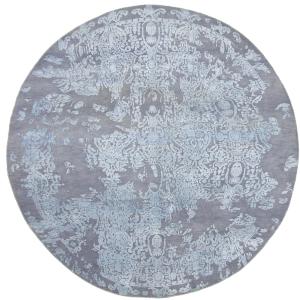
Are round rugs a new trend? No… Round rugs have been adorning a wide variety of interiors in the Orient for many centuries. Probably the oldest round rug is an incredible five hundred years old. It stands out thanks to an Egyptian pattern made up of clear geometric shapes. Regardless of this, the Orient is not the only place of origin for antique round rugs. This type of rug was also produced in France and China over the centuries. They are popular, even though most rugs are found in classic rectangular shapes.
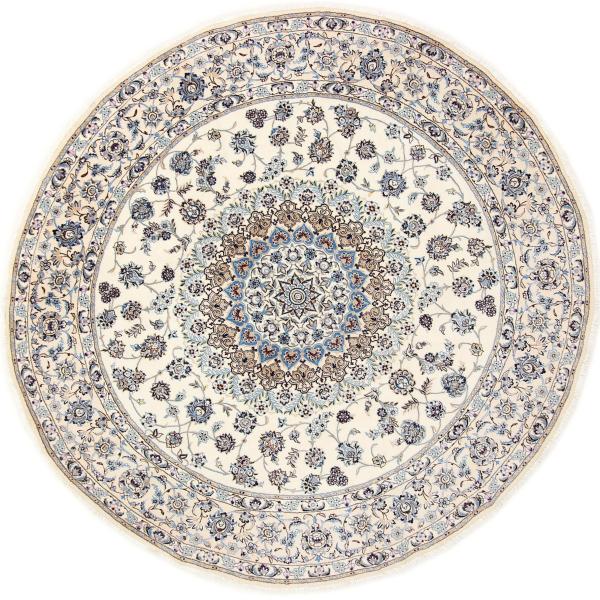
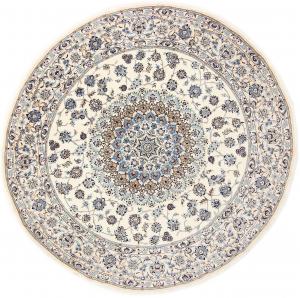
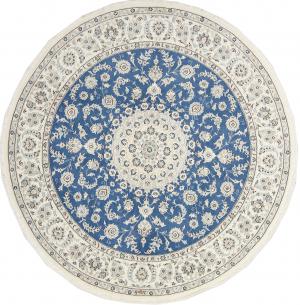
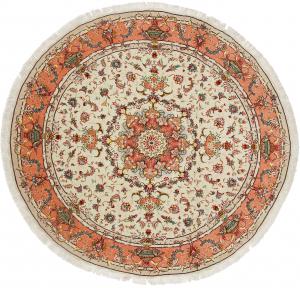
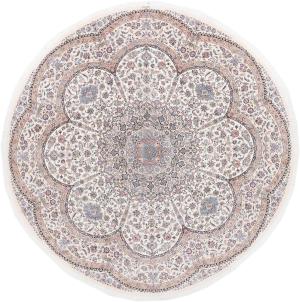
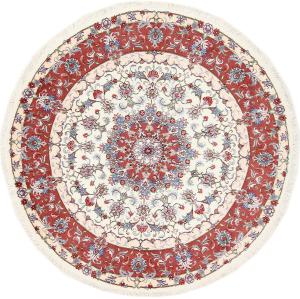
An absolute highlight is offered by oriental round rugs with a central medallion. This allows the beautiful ornaments to reveal their full potential and quite literally draw all the attention. Vintage patchwork rugs in round shapes are also very popular again. Nowadays, round rugs are somehow underestimated. Most people automatically go for angular versions – yet a round rug can feel much cosier, more relaxing or even more harmonious. This raises the question: what should you consider when choosing the size, material and position? Below are our tips for every living space.A rug should not only look good, it should feel good too. Especially when you walk across it barefoot. That is why it is worth paying attention to quality. At Nain Trading, you will find many hand-knotted rugs made from natural fibres such as virgin wool, cotton or silk. They are not only durable, but also healthy for the home and sustainable.
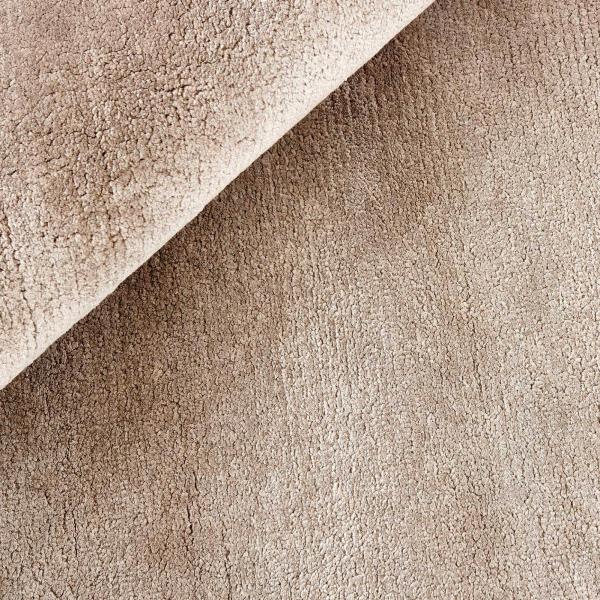
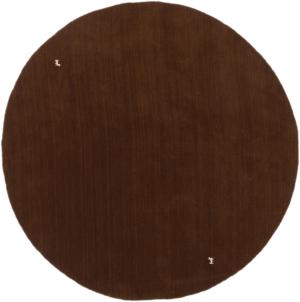
If, for example, you choose a round Gabbeh from the Nature collection, you are opting for a simple, soft model that fits perfectly into minimally furnished rooms. The colouring with plant-based dyes such as madder ensures that no synthetic residues end up in the room. A real plus point for anyone who values a healthy indoor climate.
| Colour | Effect |
|---|---|
| Beige | Natural and harmonious |
| Grey | Modern and timeless |
| Blue | Calm and relaxing |
| Green | Fresh and natural |
| Red | Bold and warm |
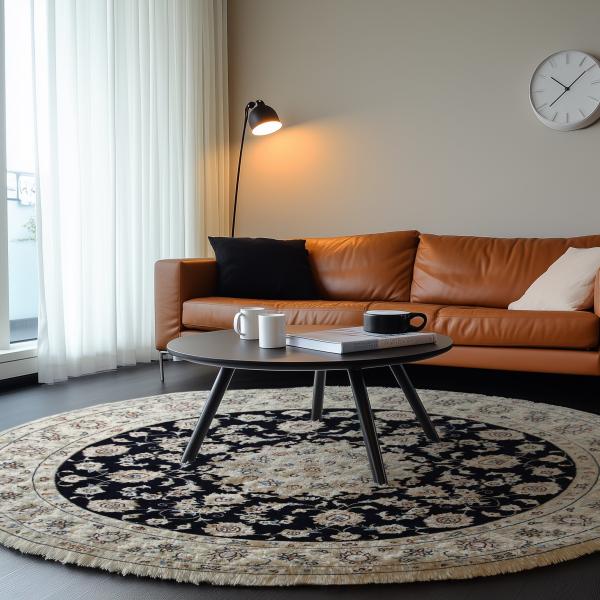
In the living room, a round rug instantly creates a more relaxed atmosphere. Especially if the room has a more angular layout. It softens the lines and looks great under a coffee table or as the centrepiece of a seating area. The important thing is that it is large enough so that at least the front legs of the sofa or armchair still sit on it.
Most people first think of long, narrow rugs for the hallway. Absolutely logical in tight spaces. But if you’ve got the room (for example, in a square entrance area or at the end of the hallway), try a round rug.
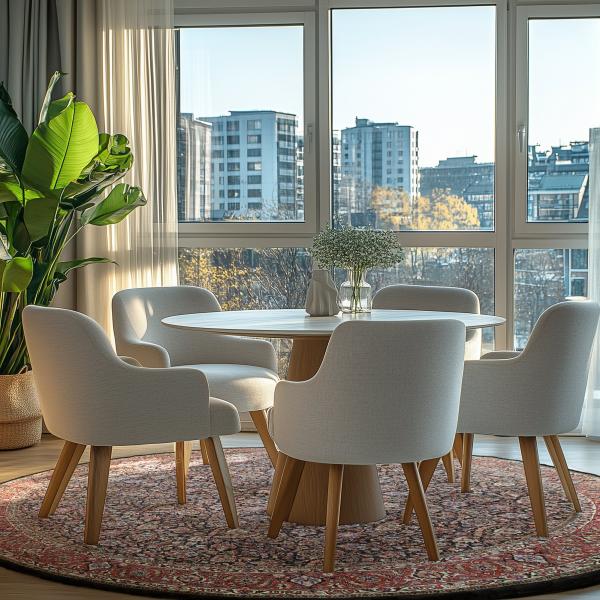
It acts like a little welcome greeting. What matters here is that the rug isn’t too delicate.People often don’t think of rugs in the kitchen – but a round rug works really well, especially in open-plan kitchen-living spaces or under a round dining table. It adds a touch of warmth and visually defines the dining area. The best choice here is rugs known as kitchen runners, which are easy to care for and as flat as possible.
| Room | Recommended Diameter |
|---|---|
| Living room | 200 cm – 300 cm |
| Dining room | 250 cm – 350 cm |
| Bedroom | 160 cm – 250 cm |
| Children's room | 120 cm – 200 cm |
| Home office | 160 cm – 250 cm |
Not necessarily. Thanks to their distinctive shape, round rugs can soften a room and draw attention to specific living areas. The overall effect depends mainly on the size you choose and where you place it.
Round rugs work beautifully with round dining tables, coffee tables or curved furniture. However, they can also create an interesting contrast with straight-lined furniture.
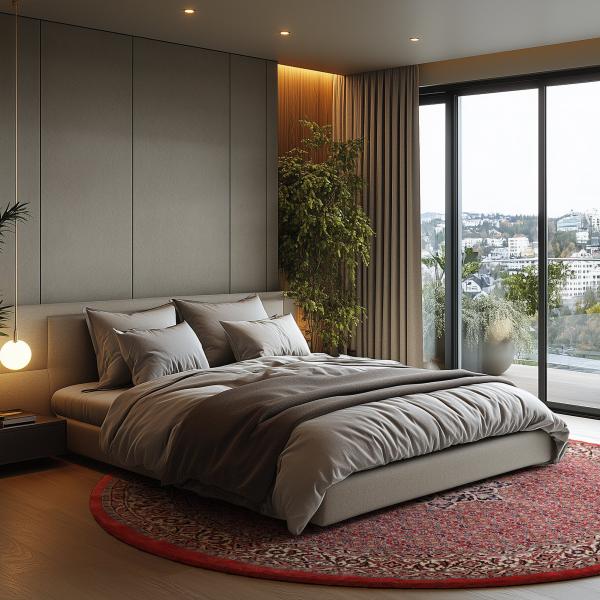
Yes. If colours, materials or patterns are coordinated, several round rugs in different rooms can create a harmonious overall look.
As the production of a round rug can be more intricate than that of a rectangular model, high-quality hand-knotted round rugs are often regarded as distinctive and exclusive interior pieces.
Their soft lines allow round rugs to create a natural contrast to the many straight edges found in most living spaces. This often results in a more balanced and homely feel to the room.