How large should a rug under a dining table be?
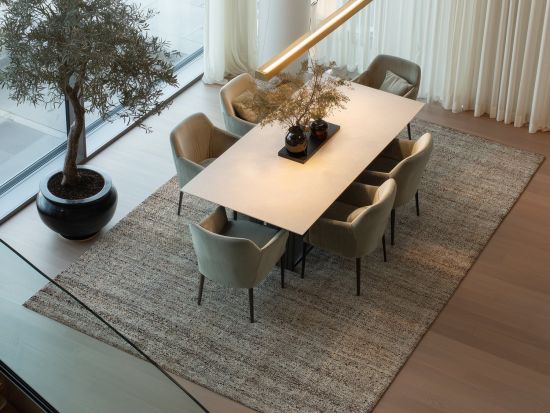
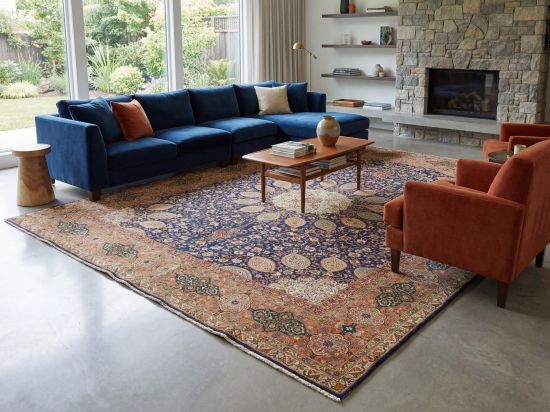
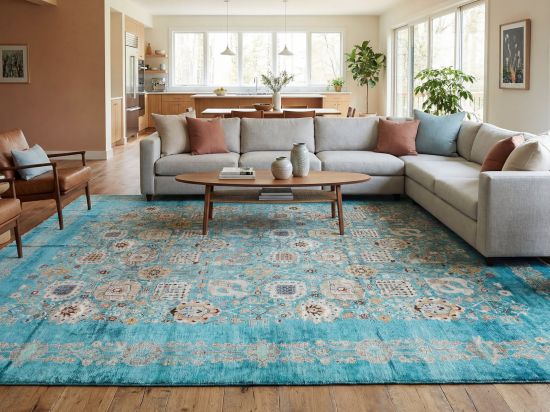
The rule of thumb is simple: measure the tabletop and add at least 60 centimetres on each side, ideally 70 to 80. This keeps all four chair legs on the rug when someone gets up and pushes their chair back, so the chair does not wobble at the rug’s edge. A table measuring 90 × 180 centimetres therefore needs a rug of at least 210 × 300 cm; 250 × 350 cm also gives diners at the ends plenty of room. Measure an extending table when it is fully extended. For round rugs, use the same calculation with the diameter of the round table. You can find more room examples in the rug size guide.
Flatweave or short pile: which rugs stand up to dining chairs?
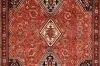
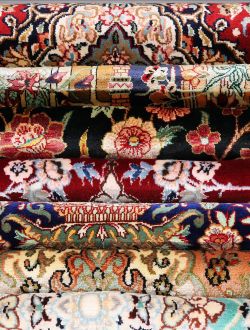
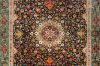
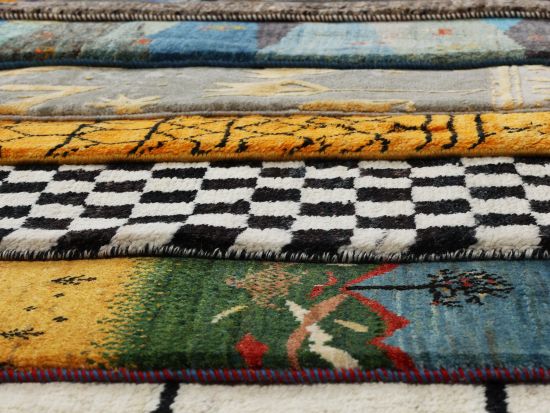
Flat, densely woven rugs work well under chair legs. Kilim rugs have no pile, so chairs glide easily over them and crumbs stay on the surface, ready to be swept or vacuumed away. Many Kilims are also reversible. Among knotted rugs, tightly packed pieces with a short pile are the best choice: a Bidjar, for example, has such a dense pile that chair legs leave very little indentation, while a wool Tabriz is another suitable option. Thick, deep pile is impractical in a dining room: chairs wobble and crumbs sink into it. If you would like a Persian rug under your dining table, you can find suitable weaving origins among our Persian rugs for dining rooms; for understated designs with a low profile, browse our modern rugs for dining rooms.
Patterns that disguise crumbs and everyday marks
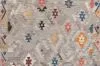
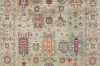
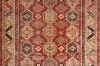
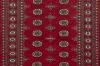
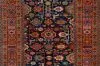
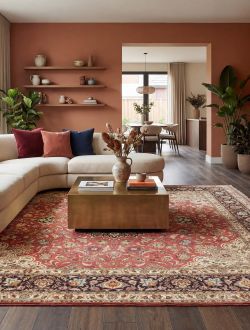
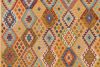
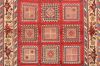
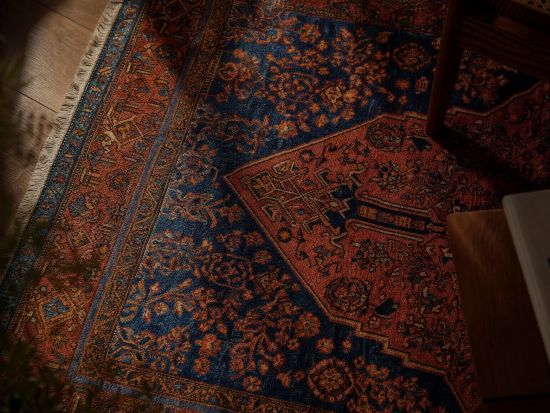
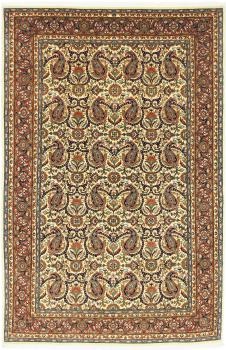
A rug patterned throughout in several colours — an all-over design, a panel pattern or a Kilim with stripes and diamonds — helps disguise crumbs and stains that go unnoticed until the next day. Plain, light-coloured areas show every mark; they can work in a dining room where children rarely eat, or where the rug is deliberately chosen as a light backdrop for a dark table. Oriental rugs with red or blue grounds bring warmth to rooms with plenty of wood and white walls.
Red wine, sauce and grease: what your rug can handle
Sheep’s wool naturally contains lanolin, which briefly holds liquids on the surface. If you blot a spill immediately with a white cloth, working from the outside in — never rubbing — and follow up with cold water, it will usually leave no stain. Dried-in grease stains and extensive soiling should be treated by a specialist rug cleaner; home remedies such as baking powder and steam cleaners damage wool and dyes. Silk rugs and viscose are not the right choice for a dining room because they do not tolerate moisture well. The care guide explains the process step by step.
Frequently asked questions about dining room rugs
Why put a rug under the dining table?
It visually separates the dining area from the rest of the room, absorbs the sound of moving chairs and protects parquet or floorboards from scratches caused by chair legs.
Round or rectangular under the dining table?
Match the rug shape to the table: rectangular rugs under rectangular and oval tables, round rugs under round tables. Either shape works with a square table.
How do I clean the rug under the table day to day?
Vacuum or sweep away crumbs. When vacuuming, use a smooth nozzle without a rotating brush and avoid the fringes. Rotate the rug every few months to spread the wear from chair legs more evenly.